


Natures Thrill Wildlife • Specialists 30+ years guiding Finland • 8 min read
Finland’s eastern forests offer one of Europe’s most compelling opportunities to observe brown bears in the wild. The viewing principle is similar in both a cabin and a hide: guests enter a prepared observation position, remain quietly inside and allow wildlife to move through the surrounding habitat.
The experience inside, however, is very different.
A traditional hide is a specialist wildlife-watching shelter. It prioritises field of view, quietness and camera access. A luxury cabin combines the observatory with private overnight accommodation and hotel-style essentials.
Understanding that distinction makes the decision much easier.
Private for one or two guests
May be shared, depending on hide
Double bed
Basic bunk, bench or sleeping area
Private shower and toilet
Usually a basic dry toilet
Yes
Varies by hide
Kitchenette and dining area
Snacks or packed provisions
Large glass windows
Viewing windows and camera ports
Through glass
Open ports designed for lenses
Relaxed, intimate and comfortable
Immersive, focused and functional
Couples, first-timers, comfort seekers
Dedicated wildlife photographers
Facilities vary by location and hide type, so confirm the exact specification in your itinerary.
Finland’s luxury bear cabins include a double bed, heating, an en-suite shower and toilet, a kitchenette and a dining area. Floor-to-ceiling windows turn the forest edge into the focus of the room.
That level of comfort matters more than it may appear on paper. Wildlife does not perform to a schedule. You may be alert for many hours, and a bear may arrive just as the light changes or after a long quiet spell.
In a cabin, one guest can rest while the other watches. You can make a hot drink, use a private bathroom and remain comfortable without interrupting the observation period. For couples with different levels of wildlife experience, this can be decisive.
A traditional hide is deliberately simpler. That is part of its authenticity, but guests should be comfortable with limited space and basic facilities.
The luxury cabins are designed for watching and photographing wildlife through large windows. Good images are possible, particularly when a bear approaches in favourable light. Glass, however, introduces technical challenges:
A traditional photography hide usually provides open lens ports. This removes the glass barrier and gives photographers more control over angle, focus and image quality.
If you have invested in a long lens and your central goal is portfolio-grade photography, the hide is usually the stronger choice. If you want memorable photographs as part of a comfortable wildlife experience, the cabin can work very well.
Many keen photographers choose both: a cabin night for the private experience and a hide session for technical photography.
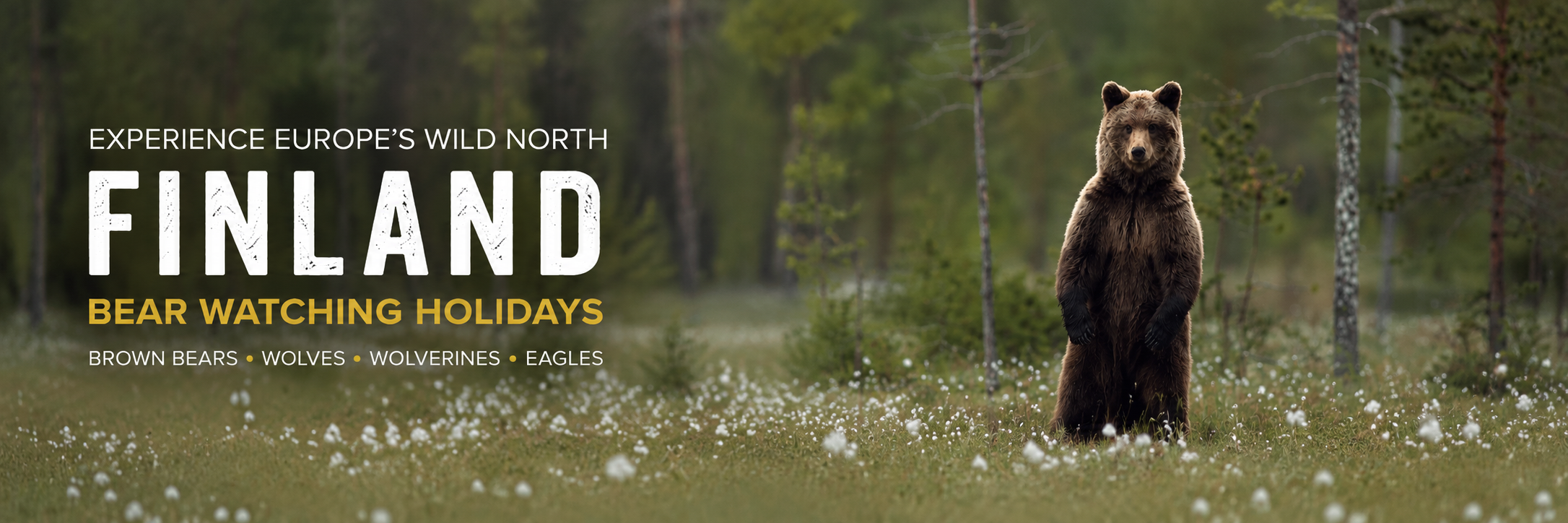
Both accommodation types are positioned in active wildlife habitat. Depending on the season and natural movement, visitors may see brown bears, wolverines, foxes and birdlife. Wolves are possible but rare.
The cabin’s large windows offer a broad, cinematic view. You can scan the clearing without remaining behind a single camera position. This is especially rewarding for guests who want to watch behaviour rather than spend the entire session looking through a viewfinder.
Hides vary in size and location. Some sit low for eye-level photography; others overlook marsh, forest or open ground. An expert operator may select the most suitable hide for the season, conditions and photographic objective.
A luxury cabin is designed for one or two guests. There are no unknown companions, competing lenses or whispered negotiations over space. That makes it particularly attractive for:
A traditional hide can create a powerful sense of shared concentration. Sitting quietly with other photographers while a bear appears from the trees is a memorable communal experience. It does, however, require consideration: movement, noise and light must be kept to an absolute minimum.
For a nervous or comfort-conscious first-time visitor, the luxury cabin is often the easiest introduction. It feels secure, warm and familiar while still placing you close to the forest.
For a first-time visitor who already enjoys wildlife hides, owns suitable camera equipment and actively wants a fieldcraft-style experience, a traditional hide may be more satisfying.
Ask yourself:
Your honest answers matter more than choosing the option that sounds most adventurous.
Neither experience should be assumed to be step-free or suitable for every mobility need. The cabins sit in a forest environment and transfers, paths, thresholds or snow conditions may affect access.
The cabin’s additional space and private facilities may be preferable for some guests, but individual requirements must be discussed before booking. Natures Thrill can check the current access arrangements with the local team rather than relying on generic descriptions.
Traditional hides are normally the more economical and photography-led option. Luxury cabins cost more because they combine specialist wildlife access with private accommodation, an en-suite bathroom and extensive facilities.
Value is personal. Paying less for a hide is not good value if discomfort prevents you from enjoying the session. Paying more for a cabin may be unnecessary if you actively prefer the focused simplicity of a hide.
For two guests, the per-person cabin price is reduced by sharing. For a solo guest, a hide may offer a more budget-conscious route, whereas the cabin provides exclusive use at the full cabin rate.
The cabin-versus-hide decision does not have to be absolute. A well-designed trip can use each for what it does best:
This combination creates variety and reduces the temptation to force one accommodation type to meet every goal.
Yes, but images are taken through glass. Control reflections, place the lens close to the window and switch off interior lights. A traditional hide is preferable when maximum technical image quality is the priority.
Traditional hides normally have basic toilet arrangements rather than a private bathroom. Ask for the exact facilities of the hide you are considering.
Both are operated using strict wildlife procedures. Guests must remain inside and follow the briefing. Safety depends on respecting those rules, not on treating one building type as casual accommodation.
Location, season and natural wildlife movement matter more than comfort level. The local team positions both cabins and hides in productive areas, but no sighting is guaranteed.
Suitability depends on age, the child’s ability to remain quiet and current operator rules. Ask Natures Thrill to confirm before booking.
It may be possible to combine them when availability allows. Request this at the planning stage because capacity is limited.
Tell Natures Thrill what you value most—comfort, photography, privacy, budget or a balance of all four. A specialist can recommend a luxury cabin, a traditional hide or a carefully sequenced combination.

Our weekly Newsletter highlights new adventures, exclusive offers, webinars, nature news, travel ideas, photography tips and more. Sign up today!
Get latest travel deals, inspiration, and exclusive offers delivered directly.
Error: Contact form not found.