


Finland’s brown bears emerge into a changing northern landscape. Between April and October, snow retreats, summer light stretches across the night, berries ripen and autumn colours sweep through the forest. Every part of the season changes what you may see and how it feels inside the cabin. The most useful approach is to match the month to your priorities rather than chase an imaginary perfect date.
Possible snow & cold
nights
Wintry images and fresh
season atmosphere
Conditions can be cold &
variable
Green growth and very long Light
Extended viewing and
photography light
Little true darkness
Lush forest and bright nights
Comfortable summer journey
Insects and strong demand
Berries, feeding activity &
deepening colour
Balanced light & wildlife
interest
Nights begin cooling
Autumn colour & darker
nights
Ruska scenery & aurora
possibility
Colder, shorter season Window
Weather and wildlife never follow an exact calendar. Snowmelt, plant growth, berry crops and animal movements vary from year to year.
April marks the beginning of the operating season. Bears are emerging from hibernation, and snow may remain in the Kuhmo landscape. For photographers, a dark bear against a pale background can create strong, uncluttered images.
The atmosphere is unmistakably northern: cold air, muted forest colours and long transitions between winter and spring. Heated accommodation and a proper bed make the luxury cabin especially attractive at this time.
Choose April if snow is central to your vision, but remember that no operator can promise a white landscape on a specific date. Pack genuine cold-weather layers and allow for wet or slushy conditions as well as crisp snow.
May can deliver a fascinating mixture of lingering winter and fast-moving spring. Daylight increases rapidly. New growth begins to soften the forest, while cooler conditions may remain.
This period suits travellers who want:
● spring atmosphere without the deepest winter cold;
● increasingly generous photography light;
● a quieter seasonal feel; and
● the possibility of varied backgrounds over a short stay.
As the month progresses, snow becomes less likely and fresh green tones more prominent.
June offers the most dramatic daylight. In eastern Finland, the sky may never become fully dark around midsummer. From a cabin with large windows, the slow changes in northern light can make the observation period feel dreamlike.
This is excellent for guests who dislike sitting in darkness and for photographers who want to work without relying on very high camera sensitivity. The trade-off is clear: June is not a Northern Lights month because the sky does not become dark enough.
Summer insects are part of the wider forest environment, although the cabin keeps you enclosed. Bring repellent for time outdoors away from the wildlife observation period.
By July, the forest is fully green and the Finnish summer is established. Temperatures are generally milder, travel is straightforward and long light continues.
July works well for a broader holiday that combines the cabin with hiking, lakes or time in Helsinki. It is also popular, so limited cabin capacity may sell early.
For photography, dense green backgrounds create a rich sense of place. Bears can blend surprisingly well into the landscape, rewarding patient observation through the cabin windows.
Late summer is a compelling all-round choice. Bears prepare for winter by feeding intensively, a phase known as hyperphagia. Natural food availability and movement still vary, but the season has strong wildlife interest.
The light is also more balanced than at midsummer. Evenings darken, nights cool and the first signs of autumn can appear. Photographers gain a wider range of moods without the limited daylight of late season. Choose August if you want:
● an active seasonal feeding period;
● comfortable travel conditions;
● some darkness without full autumn cold; and
● a transition from summer greens towards warmer colour.
September is the classic month for ruska, Finland’s autumn colour season. Gold, amber and red foliage can transform the setting around the cabin.
Darkness returns, so the Northern Lights become possible when the sky is clear and geomagnetic activity is present. An aurora should be treated as a bonus rather than an included event. Cloud, moonlight and solar conditions all matter.
Nights can be cold, but the heated cabin provides a comfortable base. For couples and landscape-minded photographers, September offers one of the most atmospheric combinations of the year.
The luxury cabin season generally continues until around 10 October. Early October can bring cold air, sparse foliage and a strong sense of wilderness. It may also offer dark skies.
This is a narrower planning window. Weather can turn wintry, and bears are moving towards the end of their active season. Travellers should bring adaptable clothing and book transport connections carefully.
That depends on the image:
● Snow contrast: April or early May.
● Long, soft northern light: late May to July.
● Lush habitat: June and July.
● Feeding-season behaviour: August into early autumn.
● Ruska colour: September, timing variable.
● Dark, atmospheric scenes: September to early October.
Photography through cabin glass requires reflection control in every month. Turn off interior lights, wear dark clothing and position the lens close to the window without touching it.
June to August is the easiest starting point for many first-time visitors because travel conditions are generally mild and there is generous light. August is arguably the best compromise between wildlife interest, darkness, temperature and photographic variety.
However, a traveller dreaming of snow should not book August, and someone hoping for aurora potential should not choose midsummer. Your desired landscape should lead the decision.
The local operator currently describes bear sighting probability across the season as approximately 80–95%, depending on the period. That is a useful indication, not a promise.
Daily weather, natural food, individual bear ranges and simple chance all influence an evening. Booking two nights gives you more opportunity than placing every expectation on a single session.
Kyle has worked extensively with brown bears across Finland for the past decade and has successfully guided hundreds of nature enthusiasts of all ages and nationalities through the country’s diverse Nordic seasons. His knowledge of the best locations for bear photography throughout Finland is second to none.
Having grown up in Norway, Roger developed a lifelong appreciation for bears. For over 30 years, he has dedicated his career to photographing bears in Finland and is widely recognised for his work with these remarkable animals. His images have appeared in numerous European publications, and he has collaborated with broadcasters including the BBC on the acclaimed series Wild Scandinavia. In 2024, he published two books: The Bear – the Strongest in the Country and The Wolf – the Smartest in the Forest.
Tell Natures Thrill:
That creates a meaningful total rather than a misleading room-only comparison.
The season runs from April to October, and bears may be seen throughout it. August is attractive for feeding behaviour, while every month offers a different landscape.
It is possible near the darker ends of the season, especially September and early October, or occasionally early April. Both depend on natural conditions and neither is guaranteed.
There may be, but snow cover and melt timing vary each year. Book April for the possibility of snow, not a guarantee.
Around midsummer, eastern Finland experiences extremely long daylight and the sky may remain in twilight rather than becoming properly dark.
Ruska usually develops during September in this region, but the exact peak depends on temperature, wind and the year.
As early as practical. The luxury cabins have very limited capacity, and preferred seasonal windows can fill well in advance.
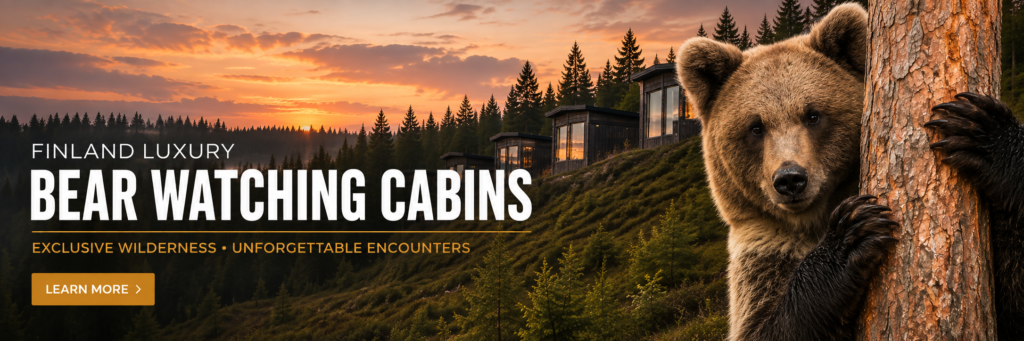
Tell Natures Thrill whether your priority is snow, long light, autumn colour, photography, warmer weather or Northern Lights potential. The team can then recommend dates that fit the experience you actually want.

Our weekly Newsletter highlights new adventures, exclusive offers, webinars, nature news, travel ideas, photography tips and more. Sign up today!
Get latest travel deals, inspiration, and exclusive offers delivered directly.
Error: Contact form not found.