


There are few wildlife photography experiences quite like watching a Dalmatian Pelican glide across still water, its enormous bill reflected on the surface and the mountains of northern Greece rising in the distance. At Lake Kerkini, these impressive birds can offer photographers opportunities to create everything from intimate portraits and behavioural images to wider photographs that capture the atmosphere of the wetland.
For wildlife photographers, the appeal is not simply the chance to see a pelican. It is the opportunity to slow down, study the birds and work with changing light, backgrounds and behaviour. With thoughtful preparation, a little patience and an understanding of how to approach each session, Lake Kerkini can be a rewarding destination for photographers of different experience levels.
In this guide, we look at how to photograph Dalmatian Pelicans at Lake Kerkini, including when to visit, which lenses to consider, useful camera settings, composition ideas and ways to work responsibly around wildlife.

Lake Kerkini lies in northern Greece, close to the border with Bulgaria. Created as a reservoir and surrounded by wetlands, farmland and mountains, it supports a rich variety of birdlife. During the colder months, Dalmatian Pelicans are a major attraction for visiting birdwatchers and photographers.
The setting is a big part of its appeal. The lake can provide reflective water, atmospheric mist, subtle winter colours and a dramatic mountain backdrop. Depending on conditions and the session, photographers may be able to work from low-level boats or from the shoreline, giving different perspectives on the birds.
Boat-based photography can be particularly useful for creating images close to the birds’ eye level. Instead of looking down from a high bank, you may be able to photograph a pelican against a cleaner background of water or distant landscape. Shoreline opportunities can offer a different set of images, including portraits, interactions and feeding behaviour when circumstances allow.
As with any wild location, no two sessions are identical. Water levels, weather, light, bird movements and local arrangements all affect what is possible. The best approach is to arrive with ideas, then remain flexible enough to respond to the conditions in front of you.
The Dalmatian Pelican (Pelecanus crispus) is one of the world’s largest pelican species. Its bulky body, long bill, large throat pouch and broad wings make it an unmistakable subject, but size alone does not make a compelling photograph. The character of the bird often comes through in the details: the texture of its feathers, the curve of its bill, a moment of preening or the subtle interaction between two individuals.
During the winter and pre-breeding period, adult birds can show distinctive changes in appearance. Their plumage, bare skin and bill colours can all contribute to a striking portrait. Take time to observe the birds before raising your camera. Notice how they move, when they pause to preen, how they interact with neighbouring birds and what they do before taking flight. Anticipating behaviour is often more effective than reacting at the last second.
Lake Kerkini can also host Great White Pelicans, so it is worth learning the differences between the two species before your visit. Looking carefully at overall size and shape, plumage and bill characteristics will help you identify your subject and give captions more accuracy.
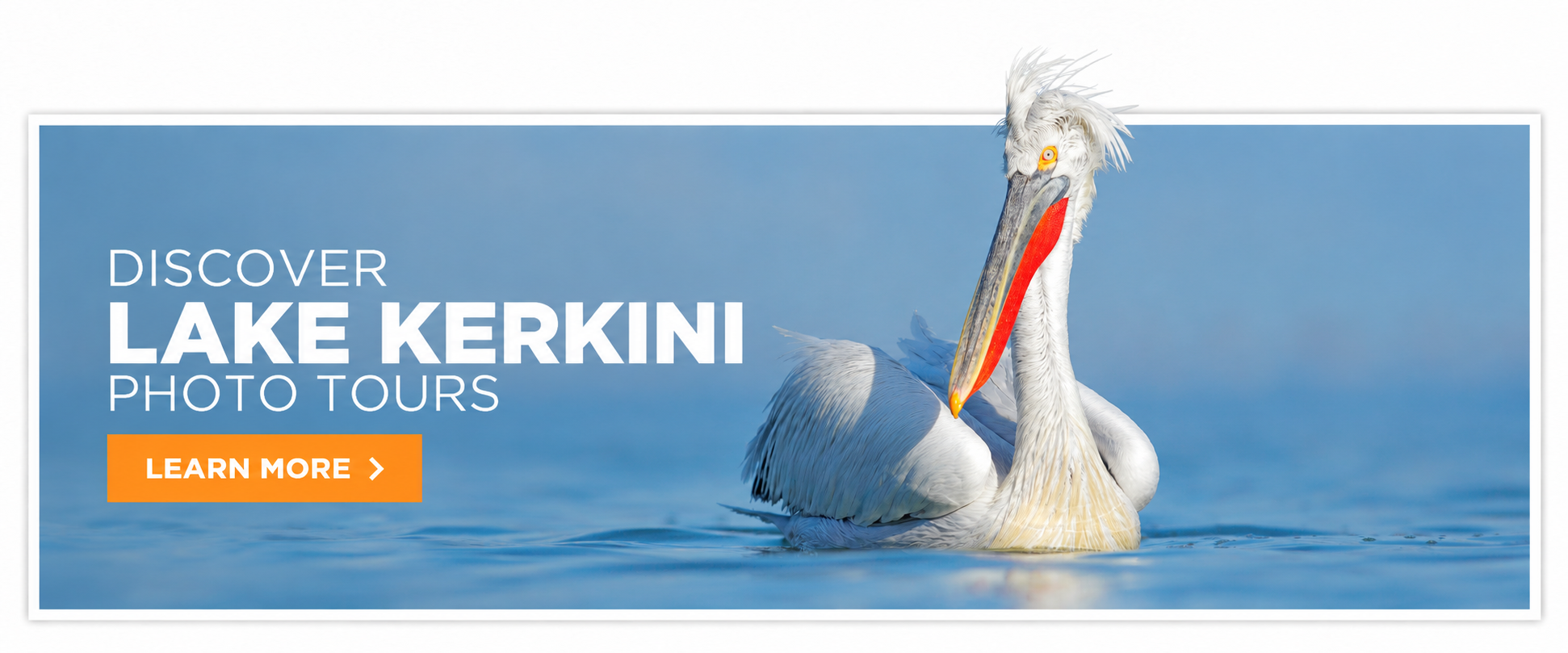
Winter is a particularly popular time to photograph Dalmatian Pelicans at Lake Kerkini. The birds gather in the area, and the season can bring attractive pre-breeding plumage as well as the possibility of mist, soft light and snow on the surrounding mountains. January and February are commonly favoured by photographers, although conditions and bird behaviour vary from year to year.
Rather than planning around a single promised scene, think about the range of photographs different conditions might offer. Calm water can work beautifully for reflections. Mist can simplify a background and create a more atmospheric image. Clear skies may provide crisp detail, while low winter sun can add shape and texture to the birds’ plumage.
Early starts can be worthwhile because the light is often softer and the lake may be calmer. However, the best time to be out will depend on the weather, local access and the behaviour of the birds. A flexible plan gives you the freedom to adapt rather than forcing a photograph when the conditions are not working.
If you are choosing dates for a photography trip, consider the balance between the seasonal appearance of the pelicans, typical weather, daylight and the kind of images you most want to make. Our related guide to the best time to photograph pelicans at Lake Kerkini will explore these seasonal differences in more detail.
There is no single perfect lens for Lake Kerkini. The best choice depends on your position, the distance to the birds, the type of image you want and how much flexibility you need.
Telephoto zooms: flexibility in the field
A telephoto zoom such as a 100–400mm is a versatile option for wildlife photography. It gives you room to adjust framing as birds move closer or farther away, and can work well for portraits, interactions and birds in their surroundings. A zoom is especially useful when you do not know exactly how a scene will develop.
Longer telephoto lenses: reach and detail
A longer lens can be useful for tighter portraits or isolating details when the birds are farther away. It can also help you keep a respectful distance rather than attempting to get closer. The trade-off is that a narrow field of view can make it harder to keep a moving bird in the frame, particularly during take-off or flight.
Wider lenses: showing the setting
Do not overlook a wider lens. Some of the strongest photographs may be environmental images that place a pelican within the wider landscape, showing the water, mist or mountain backdrop. These photographs tell a different story from a tight head-and-shoulders portrait and can help give a collection of images variety.
If possible, bring equipment that covers both tighter wildlife images and wider scenes. Keep your kit manageable, protect it from spray and damp, and avoid changing lenses unnecessarily in exposed conditions.
Camera settings should respond to the light and the behaviour in front of you. The suggestions below are useful starting points rather than fixed rules. Check your exposure and sharpness regularly, particularly when the background or light changes.
For portraits and birds sitting on the water
When the pelican is relatively still, you can often use a moderate shutter speed, provided the bird is not moving its head or interacting with another bird. As a starting point, try around 1/500 second and adjust according to movement, focal length and how steady you can hold the camera. Use a single-point or small-zone autofocus area when you need to be precise about where focus falls, and place the focus on the eye whenever possible.
For movement and interaction
Preening, bill movements and interactions can happen quickly. A shutter speed of around 1/1000 second or faster can help keep these moments sharp. Continuous autofocus and burst shooting can improve your chances of recording a brief expression or interaction, but timing and anticipation remain important.
For birds taking off or flying
Flight photography usually calls for faster shutter speeds. Start around 1/1600–1/2500 second, increasing the speed when the birds are moving quickly or you want to freeze wing movement. Use continuous autofocus tracking and a wider focus area if that helps your camera hold the subject. Practise panning smoothly and leave space in the frame in the direction the bird is travelling.
Aperture, ISO and exposure
For an individual portrait, an aperture around f/5.6–f/8 may give you enough depth of field while separating the bird from the background, depending on your lens and distance. For several birds on different focal planes, you may need a smaller aperture. Do not be afraid to raise ISO to maintain a shutter speed that suits the action; a sharp photograph with some noise is usually more useful than a blurred one.
Pelicans have large areas of pale plumage that can lose detail if highlights are overexposed. Check the histogram or highlight warnings and use exposure compensation when necessary. Bright water, dark backgrounds and changing skies can confuse automatic metering, so review the results rather than assuming the camera has judged the exposure correctly.
If your camera offers subject detection for birds, test it before the trip and learn how it behaves against water, reeds and busy backgrounds. Technology can help, but it is still worth understanding your autofocus settings and being ready to take control.

A technically sharp photograph is only the beginning. Composition, background and timing are what help turn a record shot into an image that holds the viewer’s attention.
Get down to eye level
A low viewpoint can make a pelican feel more present in the frame and reduce distracting background detail. When working from a boat, the angle may already be lower than it would be from the shore. Pay attention to the line where the water meets the bird and keep the horizon out of the head or bill where possible.
Look for clean backgrounds
Before taking a burst of images, check the space around the bird. Reeds, branches, distant boats or bright patches of water can pull attention away from the subject. A small change in your position or the direction you point the camera may be enough to simplify the scene.
Use reflections and negative space
Still water can create a pleasing reflection, particularly when the bird is separated from the background. Leave breathing room around the subject and consider whether the reflection is an important part of the composition. You do not always need to fill the frame; a little space can convey calm and atmosphere.
Tell a story through behaviour
Look beyond portraits. Preening, stretching, interactions between birds, feeding and the moment before take-off can all tell a story. Watch for repeated patterns in behaviour and be ready before the action begins. A short burst at the right moment is often more effective than holding the shutter down continuously.
Try environmental portraits
A pelican against distant mountains or a misty lake tells the viewer where the photograph was made. Use a wider framing to show the relationship between bird and landscape. These images can be particularly effective when mixed with close portraits and action photographs in a photo story.

Photographing from a low-level boat can offer an engaging perspective, but it introduces practical challenges. The platform may move, other people may be sharing the space, and access to camera bags can be limited. Prepare your equipment before the session begins so you can concentrate on the birds once you are on the water.
Use a shutter speed that accounts for both the bird’s movement and the movement of the boat. A monopod or tripod may be impractical in a confined space, so many photographers prefer to handhold or use a support only if the operator and conditions make it safe. Keep straps secure and avoid leaving loose equipment where it could fall overboard.
Protect your camera from spray, damp and sudden changes in temperature. A simple rain cover, microfibre cloth and a dry bag for spare equipment can be useful. If you move from cold outdoor conditions into a warm room, allow equipment to acclimatise where practical to reduce condensation.
Most importantly, follow the instructions of your local boat operator and guide. The aim is to work with the conditions and the birds, not to force a position or approach that compromises safety or wildlife welfare.
Good wildlife photography begins with respect for the subject. Always follow local guidance and keep to the distances and approaches recommended by your guide or boat operator. Never pursue a bird, block its route, interfere with nesting activity or encourage behaviour purely for a photograph.
Where feeding activity or traditional local practices influence bird movements, follow the guidance of the people responsible for the session. Do not assume that an opportunity available in one location is appropriate elsewhere. Avoid loud noises and sudden movements, and be willing to stop photographing if the birds show signs of disturbance.
Ethical choices can also improve your images. A calm, unhurried approach gives you more time to observe, anticipate and make thoughtful compositions. The goal is not simply to get close, but to make photographs that represent the birds honestly and responsibly.
You do not need the newest camera or the longest lens to enjoy pelican photography. A reliable camera, a lens you know well and a good understanding of exposure will take you a long way. Before travelling, practise changing autofocus settings, adjusting exposure compensation and switching quickly between still subjects and action.
Keep your kit simple enough to use comfortably. If you are travelling with a group, follow any equipment and luggage guidance provided before departure, as space in vehicles and boats may be limited.
Independent travel can be rewarding, but a photography-focused expedition can help you use your time more effectively. The value lies in having a plan shaped around the subject, the light and the conditions, alongside guidance that helps you make decisions in the field.
On a dedicated pelican photography expedition, the emphasis is on photography rather than rushing between a long list of sightseeing stops. Time can be devoted to observing the birds, refining compositions and adapting to changing light. Photographer guides can also help with practical questions, from autofocus and exposure to image selection and making the most of a scene.
Small groups can make it easier to share advice and discuss images while keeping the experience focused. The exact sessions, access arrangements and photographic opportunities depend on the published itinerary and local conditions, so read the expedition details carefully before booking.
At Natures Thrill, our Pelicans of Lake Kerkini Photo Expedition is designed for photographers who want to spend dedicated time with these remarkable birds. If Lake Kerkini is on your photography wish list, explore the expedition page for the current dates, itinerary and booking information.
Lake Kerkini offers a rare combination of impressive birds, evocative winter landscapes and opportunities to work with a subject in a variety of ways. Whether your goal is a clean portrait, a moment of behaviour or a wider image that captures the atmosphere of northern Greece, patience and preparation will help you make the most of your time.
Explore the Natures Thrill Pelicans of Lake Kerkini Photo Expedition to learn more about the trip, review the itinerary and find out how to enquire about joining us.
Yes, and this is one of the reasons specialist wolf photography is so exciting. Wolves are social animals and may travel in family groups or packs, although whether a particular session produces a single wolf or several animals depends entirely on natural behaviour. Wildlife Safaris Finland specifically notes that wolves visiting its photography areas may appear alone or in a pack.
A pack encounter can be extraordinary because the photographic possibilities change completely. Instead of concentrating on a single animal, photographers can watch social interactions, movement and changing positions within the group. However, these encounters should be regarded as a fortunate outcome rather than something that can be guaranteed simply by booking a particular date.
The answer is close enough for excellent photography, but the objective is never to approach the animal. Specialist hides allow wolves to come within photographic range while visitors remain concealed. This is very different from walking towards a wolf or attempting to follow one through the forest. The best wildlife photography often comes from allowing the animal to control the encounter. When a wolf approaches a hide naturally, the photographer can work with the animal’s behaviour without chasing it, calling it or otherwise interfering. This is both safer and more respectful of the wildlife.
Yes. Specialist sites can occasionally produce encounters with more than one individual during a session, although the exact number varies considerably. Finnature notes that it is not uncommon to encounter several individuals during a single night at selected photography sites, while also stressing that quiet nights do occur.
For photographers, multiple animals create very different opportunities from a single wolverine. Interactions, movement and changing positions can produce more dynamic images, although the photographer needs to remain alert because the action can develop quickly.
One of the greatest advantages of travelling for wolves in eastern Finland is that you are entering a landscape shared by several of Europe’s most sought-after mammals. Brown bears and wolverines are the obvious companions, but depending on location and season you may also encounter forest reindeer, moose, foxes, eagles, capercaillie, black grouse and numerous smaller boreal species.
This makes a predator-focused holiday much more rewarding than a single-species trip. A quiet afternoon waiting for wolves can become an opportunity to photograph an eagle, while a night in a hide may produce bears and wolverines as well as the target species. The wider ecosystem is always part of the experience.
Wolves are an important and sometimes controversial part of Finland’s natural heritage. They are protected under Finnish and European legislation, and their conservation remains a subject of considerable public discussion. For visitors, the most important principle is simple: observe wolves without interfering with them.
Never attempt to approach, follow or feed a wolf for the sake of a photograph. If you are using a specialist hide, follow the instructions of the guide and remain in the designated area. The strongest wildlife experiences come from allowing animals to behave naturally, and responsible tourism helps ensure that these opportunities remain available for future visitors.

Our weekly Newsletter highlights new adventures, exclusive offers, webinars, nature news, travel ideas, photography tips and more. Sign up today!
Get latest travel deals, inspiration, and exclusive offers delivered directly.
Error: Contact form not found.