


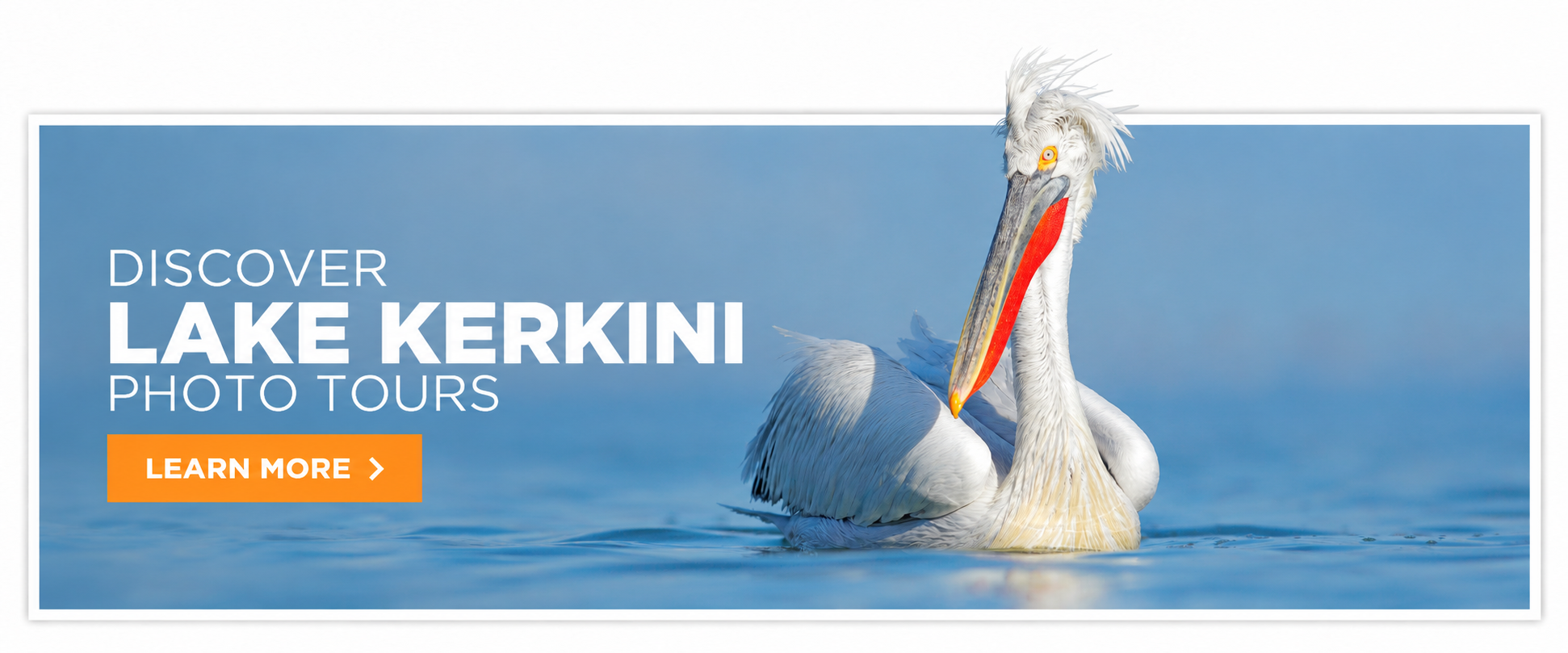
Planning a wildlife photography trip to Lake Kerkini in northern Greece? The good news is that reaching this remarkable wetland is relatively straightforward. For our Pelicans of Lake Kerkini Photo Expedition, the airport you need to look for is Thessaloniki Airport (SKG). This is the main international gateway for the region.
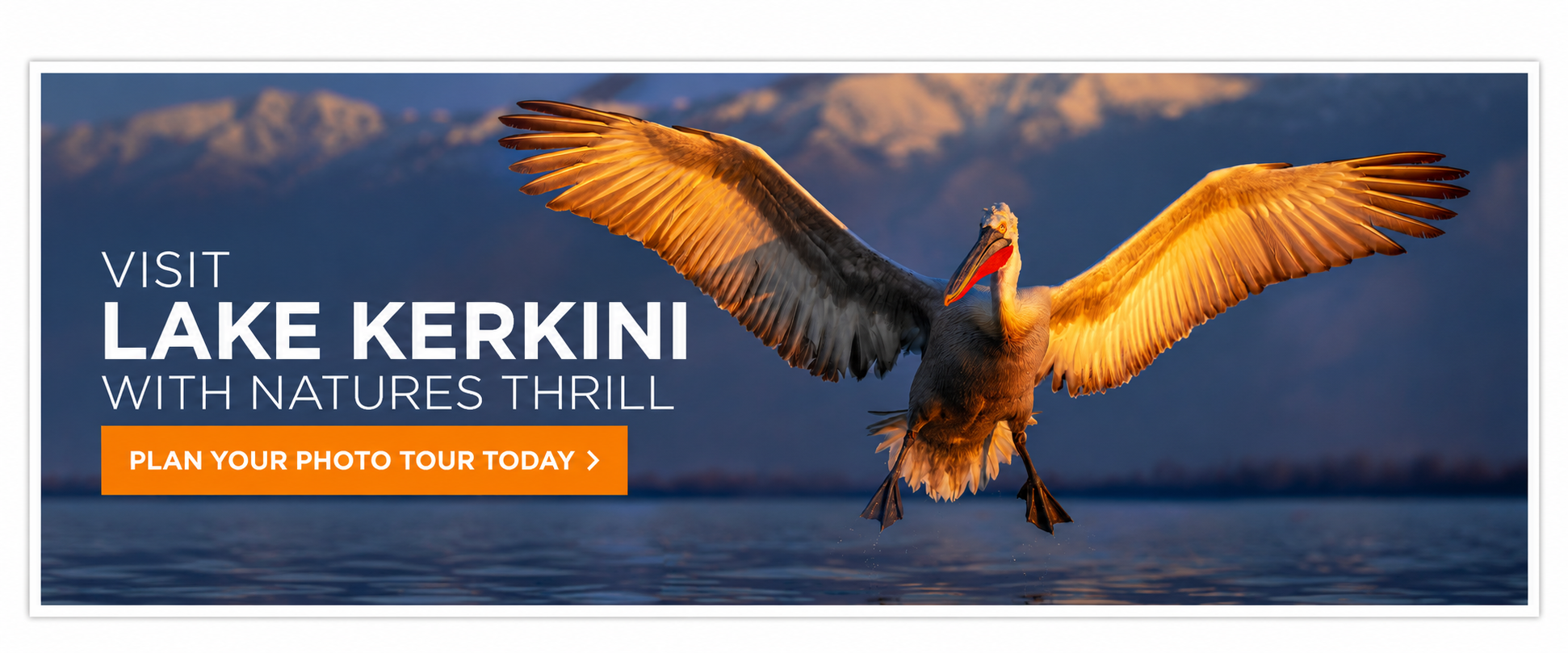
From there, the journey continues north towards Lake Kerkini, a landscape of wetlands, open water and mountain views that is best known to many photographers for its Dalmatian Pelicans. And with Natures Thrill, you do not need to organise your own onward transfers, hire a car or work out unfamiliar local transport. We include all ground transport for the expedition, so once you arrive at the agreed airport meeting point, the arrangements are taken care of.
In this guide, we explain which airport to fly into, the airlines that may operate flights from the UK, what you can expect to pay and how we make the journey to Lake Kerkini simple.

The airport to use is Thessaloniki Airport “Makedonia” (SKG), serving Greece’s second-largest city. It is the most convenient international airport for reaching the Lake Kerkini area and is the arrival airport for our expedition.
When searching for flights, enter “Thessaloniki” or the airport code “SKG” as your destination. Check that you have selected Thessaloniki in Greece, rather than another airport with a similar name. Flight schedules can vary by season, so it is worth checking the dates and arrival times carefully before booking.
For a photography trip, we recommend checking the expedition’s confirmed arrival and departure arrangements before purchasing flights. This helps ensure your flights fit the group transfer schedule and avoids unnecessary stress at either end of the trip.
Thessaloniki is served by a range of European airlines. Depending on the season and your departure airport, UK travellers may find direct flights with airlines such as:
Airlines and direct routes change between summer and winter schedules, and not every airline operates every route all year. Always check the airline’s own website for the exact dates you plan to travel. If there is no suitable direct flight from your nearest airport, a connecting service may be an alternative.
Useful starting point: the official Thessaloniki Airport website lists airlines and destinations.
Visit www.skg-airport.gr to check current route information.
Airfares depend on the time of year, how far ahead you book, the departure airport, baggage requirements and how flexible your dates are. As a broad guide for UK travellers, economy return fares can sometimes be found for around £80–£160, while a more typical planning budget may be approximately £150–£330 return. Prices can be higher during busy holiday periods or when only a few seats remain.
These figures are indicative rather than a quote or guaranteed fare. Prices change frequently, and low headline fares may not include checked baggage, seat selection or other extras. If you are travelling with photography equipment, check the airline’s cabin-baggage dimensions and weight allowance before booking, especially if you intend to carry a camera body and large telephoto lens in the cabin.
To keep costs sensible, compare a few departure airports, check both direct and connecting options, and look at the total cost after adding the baggage you need. It is often worth choosing a flight that fits the group’s transfer arrangements rather than saving a small amount on a flight that arrives at an inconvenient time.
Flight prices and routes are subject to change. Check current fares with the airline or a reputable flight comparison service before making your booking.
Lake Kerkini is approximately 110–115 kilometres by road from Thessaloniki Airport, depending on the precise destination around the lake. The drive typically takes around 1 hour 40 minutes to 2 hours in normal conditions, although traffic, weather and the exact accommodation location can affect the journey time.
The route takes you away from the busy airport area and north through the landscapes of Central Macedonia. For many visitors, the transfer is the start of the experience: the city gives way to open countryside as you approach the lake and the foothills of Mount Beles.
Public transport is possible but can involve several connections and a considerably longer journey. For visitors carrying camera equipment, arranging a rental car or trying to coordinate buses and trains can add complexity. That is why having your onward transport organised in advance makes such a difference.
One of the benefits of joining our Pelicans of Lake Kerkini Photo Expedition is that you do not need to arrange the onward journey yourself. We include all ground transport required for the expedition, including the transfer from Thessaloniki Airport to the Lake Kerkini area and the planned transport associated with the tour.
That means no need to hire a car, navigate unfamiliar roads, negotiate local transfers or work out how to move your photography equipment between the airport and the destination. You can concentrate on getting here, meeting the group and preparing for the photography ahead.
For a specialist photography trip, this matters. You are travelling with camera bodies, lenses and other equipment, and you want to arrive ready to make the most of your time in the field. Having the ground arrangements organised removes one more thing to think about.
From the moment you arrive at the agreed meeting point at Thessaloniki Airport, the logistics are taken care of by the expedition team in line with the published itinerary. Please check the tour details and pre-departure information for the confirmed meeting point, transfer times and any arrangements that apply to your particular departure.

If direct flights from your local airport do not fit the expedition dates, look at other UK departure airports or connecting routes to Thessaloniki. A connection may offer more choice, but check the total journey time and make sure the arrival time works with the group’s transfer arrangements.
Before booking an alternative flight, contact Natures Thrill if you are unsure whether it fits the planned schedule. We can clarify the published arrival arrangements for the expedition, helping you make an informed choice before you commit to your flights.

Ethical wildlife photography at Lake Kerkini
Good wildlife photography begins with respect for the subject. Always follow local guidance and keep to the distances and approaches recommended by your guide or boat operator. Never pursue a bird, block its route, interfere with nesting activity or encourage behaviour purely for a photograph.
Where feeding activity or traditional local practices influence bird movements, follow the guidance of the people responsible for the session. Do not assume that an opportunity available in one location is appropriate elsewhere. Avoid loud noises and sudden movements, and be willing to stop photographing if the birds show signs of disturbance.
Ethical choices can also improve your images. A calm, unhurried approach gives you more time to observe, anticipate and make thoughtful compositions. The goal is not simply to get close, but to make photographs that represent the birds honestly and responsibly.
What camera equipment should you bring?
You do not need the newest camera or the longest lens to enjoy pelican photography. A reliable camera, a lens you know well and a good understanding of exposure will take you a long way. Before travelling, practise changing autofocus settings, adjusting exposure compensation and switching quickly between still subjects and action.
Keep your kit simple enough to use comfortably. If you are travelling with a group, follow any equipment and luggage guidance provided before departure, as space in vehicles and boats may be limited.
Getting to Lake Kerkini is simpler when the main travel arrangements are planned in advance. Fly into Thessaloniki Airport (SKG), confirm that your flights fit the expedition schedule and let Natures Thrill take care of the ground transport. Once you arrive at the agreed meeting point, you can leave the driving and logistics to us and focus on the reason you came: photographing the remarkable Dalmatian Pelicans of Lake Kerkini.
Explore our Pelicans of Lake Kerkini Photo Expedition for the latest dates, itinerary and booking information, or contact the Natures Thrill team if you would like guidance before booking your flights.
Yes, and this is one of the reasons specialist wolf photography is so exciting. Wolves are social animals and may travel in family groups or packs, although whether a particular session produces a single wolf or several animals depends entirely on natural behaviour. Wildlife Safaris Finland specifically notes that wolves visiting its photography areas may appear alone or in a pack.
A pack encounter can be extraordinary because the photographic possibilities change completely. Instead of concentrating on a single animal, photographers can watch social interactions, movement and changing positions within the group. However, these encounters should be regarded as a fortunate outcome rather than something that can be guaranteed simply by booking a particular date.
The answer is close enough for excellent photography, but the objective is never to approach the animal. Specialist hides allow wolves to come within photographic range while visitors remain concealed. This is very different from walking towards a wolf or attempting to follow one through the forest. The best wildlife photography often comes from allowing the animal to control the encounter. When a wolf approaches a hide naturally, the photographer can work with the animal’s behaviour without chasing it, calling it or otherwise interfering. This is both safer and more respectful of the wildlife.
Yes. Specialist sites can occasionally produce encounters with more than one individual during a session, although the exact number varies considerably. Finnature notes that it is not uncommon to encounter several individuals during a single night at selected photography sites, while also stressing that quiet nights do occur.
For photographers, multiple animals create very different opportunities from a single wolverine. Interactions, movement and changing positions can produce more dynamic images, although the photographer needs to remain alert because the action can develop quickly.
One of the greatest advantages of travelling for wolves in eastern Finland is that you are entering a landscape shared by several of Europe’s most sought-after mammals. Brown bears and wolverines are the obvious companions, but depending on location and season you may also encounter forest reindeer, moose, foxes, eagles, capercaillie, black grouse and numerous smaller boreal species.
This makes a predator-focused holiday much more rewarding than a single-species trip. A quiet afternoon waiting for wolves can become an opportunity to photograph an eagle, while a night in a hide may produce bears and wolverines as well as the target species. The wider ecosystem is always part of the experience.
Wolves are an important and sometimes controversial part of Finland’s natural heritage. They are protected under Finnish and European legislation, and their conservation remains a subject of considerable public discussion. For visitors, the most important principle is simple: observe wolves without interfering with them.
Never attempt to approach, follow or feed a wolf for the sake of a photograph. If you are using a specialist hide, follow the instructions of the guide and remain in the designated area. The strongest wildlife experiences come from allowing animals to behave naturally, and responsible tourism helps ensure that these opportunities remain available for future visitors.

We promise never to spam you. Your details are safe with us and handled in accordance with our Privacy Policy. You can unsubscribe at any time.
Get latest travel deals, inspiration, and exclusive offers delivered directly.
Error: Contact form not found.