


After guiding wildlife photography holidays across Finland for many years, this is probably the question I’m asked more than any other before guests arrive.
“Kyle… are the mosquitoes really as bad as everyone says?”
It’s a fair question. If you’ve spent any time researching Finland, you’ve almost certainly come across stories of vast swarms of mosquitoes descending on hikers in Lapland. Social media is full of dramatic videos showing clouds of insects surrounding people, and it’s understandable that many visitors begin to wonder whether they’ll spend their holiday swatting mosquitoes rather than enjoying Finland’s incredible wildlife.
So, let’s answer the question honestly.
Yes, Finland has mosquitoes.
In fact, it has plenty of them. But are they bad enough to ruin your holiday?
In my experience — absolutely not.
After spending countless weeks each year guiding guests in the Finnish wilderness, I’ve found that mosquitoes are usually a much bigger concern before people arrive than they are once the holiday is underway.
By the second or third day, the conversation has usually moved on to Brown Bears, Wolverines, Wolves and the incredible photographs everyone has captured.
Here’s everything you need to know.
Finland provides almost perfect breeding conditions for mosquitoes.
The country is home to:
When the snow melts in late spring, countless shallow pools of standing water are left behind, providing ideal breeding sites for mosquito larvae.
Add long summer days and warm temperatures, and mosquito numbers can increase rapidly. This isn’t unique to Finland, it’s simply part of life in healthy northern ecosystems.
Ironically, the same untouched wilderness that supports bears, wolves and wolverines also creates ideal conditions for mosquitoes.
One of the biggest misconceptions is that mosquito numbers remain the same throughout summer. In reality, they change considerably as the season progresses.
The bear watching season in Finland runs from April to October, when brown bears are active before returning to hibernation during the winter months. Each season offers a unique wildlife experience.
Mosquitoes are generally very few in number. Although conditions vary from year to year, early spring is usually one of the quieter periods before the main hatch begins.
June is typically when mosquito numbers reach their highest levels. Snowmelt has filled woodland pools, temperatures are increasing, and newly emerged adults become widespread throughout many parts of the country.
If you’re visiting Finland during June, it’s worth packing a good insect repellent and lightweight long-sleeved clothing.
Mosquitoes remain common throughout July, particularly:
Even then, numbers can vary enormously depending on the weather. A gentle breeze can make a remarkable difference.
August is when many of our wildlife holidays take place, and for good reason. Not only are Brown Bears incredibly active as they prepare for hibernation, but mosquito numbers have often begun to decline compared with early summer.
That’s not to say you’ll never encounter them, but they’re usually far less of a talking point than many guests expect. In fact, I’m often asked about mosquitoes extensively before a tour, only for guests to comment afterwards that they hardly thought about them once they settled into the experience.
By September, cooler nights significantly reduce mosquito activity. On many evenings they’re barely noticeable at all. Combined with beautiful autumn colours and exceptional wildlife viewing, it’s one of the most comfortable times to explore Finland’s forests.
This is another question I hear regularly.
The simple answer is… Usually much less than people imagine.
Most traditional wildlife hides are enclosed structures with only small photography openings or mesh-covered windows. Once you’re settled inside, mosquito activity is generally far lower than outside in the forest.
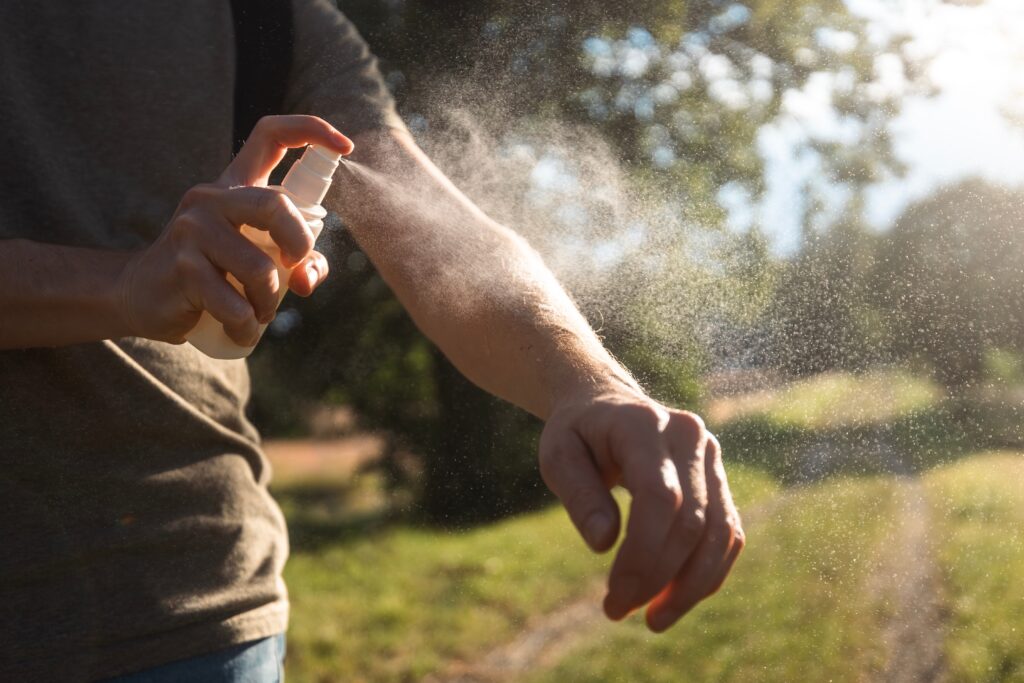
The short walk to and from the hide is usually when you’re most likely to encounter them, particularly during calm evenings. Applying repellent before leaving the lodge and wearing suitable clothing is normally all that’s needed.
Once the wildlife starts appearing, you’ll almost certainly find yourself concentrating on the bears rather than the mosquitoes.
Have you ever noticed that one person in a group seems to attract every mosquito while someone standing next to them barely receives a single bite? You’re not imagining it.
Mosquitoes are attracted by several factors, including:
Over the years I’ve guided plenty of groups where one guest hardly noticed the mosquitoes while another became their obvious favourite. Unfortunately, there isn’t a guaranteed way of predicting which category you’ll fall into!
Over the years I’ve tried a wide variety of insect repellents while working in Finland. These are the options I generally recommend.
Products containing DEET remain among the most effective repellents available and are widely used by outdoor professionals around the world. However, there is one important point that photographers should be aware of. DEET can damage certain plastics, synthetic materials and rubberised coatings.
That means if you accidentally get it on:
It may soften or permanently mark the surface.
My advice is always to:
Used correctly, DEET is highly effective, but it pays to be mindful if you’re travelling with expensive photography gear.
Smidge has become increasingly popular with photographers and outdoor enthusiasts. Many people find it provides excellent protection whilst being kinder to clothing and equipment than high-strength DEET products.
It’s become one of my preferred recommendations for guests.
Jungle Formula offers several products with different strengths and is widely available throughout the UK. For most visitors travelling during Finland’s summer months, it’s another dependable option.
Choosing the right clothing often makes a bigger difference than the repellent you use.
The aim isn’t to wrap yourself in thick layers — Finnish summers can be pleasantly warm, but rather to cover exposed skin while remaining comfortable.
Modern technical shirts are breathable, quick-drying and provide excellent protection without becoming uncomfortable.
They’re ideal for walks through the forest and the short journey to wildlife hides.
Long trousers protect against:
They also tend to be much more comfortable than shorts when moving through woodland.
Earthy greens, browns and greys work well. Not only are they practical for wildlife photography, but they also help you blend naturally into the environment.
Good footwear is often overlooked.
Forest paths can include exposed roots, soft moss, uneven ground and damp patches, so comfortable walking shoes or lightweight hiking boots are a far better choice than sandals or flip-flops.
Even warm summer days can become surprisingly cool once the sun begins to set.
A lightweight waterproof or soft shell jacket is worth carrying, particularly if you’re spending long evenings watching wildlife.
If I could offer just a handful of simple pieces of advice, they’d be these:
Apply repellent before entering the forest—not after you’ve already been bitten.
Wear lightweight long sleeves and trousers rather than relying solely on insect spray.
Keep moving during walks. Mosquitoes are generally more noticeable when standing still.
Don’t let mosquitoes dominate your expectations of Finland. They’re a small part of an extraordinary wilderness experience.
Focus on why you’ve travelled there. Once a Brown Bear steps silently out of the forest, I can almost guarantee you’ll forget about the mosquitoes.
The honest answer is: Sometimes.
If you visit during early summer, walk through sheltered woodland on a warm, still evening and forget your repellent, you’ll probably receive a few bites. But that’s only part of the story.
Most visitors quickly adapt. Good clothing, sensible use of insect repellent and realistic expectations make a huge difference.
After many years of guiding wildlife holidays in Finland, I genuinely can’t remember a guest saying that mosquitoes ruined their trip.
What I do remember are conversations about watching a female Brown Bear emerge from the forest with two tiny cubs, hearing Wolves howl in the distance, photographing a Wolverine at dusk and witnessing some of Europe’s last truly wild landscapes.
Those are the memories people take home. A few mosquito bites rarely make the highlights reel.
So, if mosquitoes are the one thing making you hesitate about visiting Finland, my advice is simple: Pack a good repellent, wear the right clothing, and don’t let a few tiny insects stop you experiencing one of Europe’s greatest wildlife destinations.

Our weekly Newsletter highlights new adventures, exclusive offers, webinars, nature news, travel ideas, photography tips and more. Sign up today!
Get latest travel deals, inspiration, and exclusive offers delivered directly.
Error: Contact form not found.