


Few wildlife encounters compare to watching a wild brown bear emerge silently from the Finnish forest at dusk. For many visitors, it’s the highlight of their trip to Finland — a rare opportunity to observe Europe’s largest predator behaving naturally in one of the continent’s last great wildernesses.
However, a common question arises amongst travellers considering a Finland bear watching holiday: “Is bear watching actually good for conservation, or is it simply tourism?”
The answer is nuanced, but overwhelmingly positive. While bear watching does present ethical considerations, particularly surrounding supplementary feeding, the industry has evolved into one of Finland’s most valuable forms of wildlife tourism. It supports local economies, provides incentives for protecting bears, creates employment in remote communities, and demonstrates that living wildlife can be worth far more than dead wildlife.
At Natures Thrill, we believe wildlife tourism should always leave nature better than it found it. Here’s why Finland has become one of Europe’s leading examples of responsible bear tourism.
Finland is home to approximately 2,000 brown bears, making it one of Europe’s healthiest bear populations. Most live within the vast forests bordering Russia, where extensive wilderness provides ideal habitat with relatively little human disturbance.
Unlike many European countries where bears survive only in isolated mountain ranges, Finland’s eastern forests still allow bears to roam naturally across enormous territories.
This healthy population didn’t happen by accident.
Strict wildlife management, habitat protection, scientific monitoring and increasing public acceptance have all contributed towards maintaining favourable conservation status. Finland’s Ministry of Agriculture and Forestry specifically identifies sustainable wildlife tourism as one component of ensuring bears remain a valued part of Finland’s natural heritage.
Bear watching may appear to be a niche activity, but for rural Finland it represents an important source of income.
According to Finland’s Bear Management Plan:
While €3.2 million may seem modest compared with mainstream tourism sectors, its importance lies in where that money is spent.
Bear watching takes place almost exclusively in remote regions such as:
These are communities where alternative tourism opportunities are relatively limited.
Rather than concentrating tourism income in major cities, bear watching distributes visitor spending directly into rural Finland.
One of the greatest strengths of wildlife tourism is its multiplier effect. Visitors don’t simply pay for one evening in a photography hide.
Instead, they often purchase:
For many visitors, a bear watching experience forms the centrepiece of a longer Finnish holiday.
This creates business not only for wildlife operators but also for:
Every international visitor arriving to photograph Finland’s bears contributes to an entire network of small businesses that would otherwise receive significantly fewer tourists.
Across Europe, many rural communities face similar challenges:
Wildlife tourism helps slow this trend.
A successful bear watching business requires:
Many of these jobs simply would not exist without wildlife tourism.
Instead of relying solely on forestry or seasonal work, local residents gain year-round income connected directly to conserving the surrounding wilderness.
This creates a powerful economic incentive: healthy bear populations become valuable community assets rather than liabilities.
Perhaps the greatest conservation benefit of wildlife tourism is changing how people value wildlife. Historically, large predators across Europe were often viewed primarily as threats to livestock or competitors for game species. Today, a single bear may be photographed thousands of times throughout its life by visitors from around the world.
Each visitor pays to experience seeing bears alive. That means one bear can generate tourism income repeatedly for many years. This creates an entirely different economic model. Rather than viewing bears as animals that create costs, they become wildlife capable of supporting businesses, employment and local investment.
Around the world, conservation repeatedly shows that wildlife survives best when local communities benefit financially from protecting it. Finland provides one of Europe’s strongest examples of this principle.
While tourism alone cannot conserve wildlife, it contributes in several important ways.
People are far more likely to support conserving animals they have experienced in the wild. Visitors return home with a deeper understanding of Finland’s ecosystems, often becoming long-term ambassadors for wildlife conservation.
Communities benefiting from wildlife tourism have stronger reasons to support healthy bear populations. When bears create sustainable income, conservation becomes economically valuable.
Successful wildlife operators often invest heavily in:
These investments indirectly support conservation outcomes.
Bear watching introduces thousands of overseas visitors to Finland’s forests each year.
International tourism raises awareness of Finland’s wilderness and reinforces the country’s reputation as one of Europe’s leading destinations for responsible nature tourism.
No discussion about Finland bear watching holidays would be complete without addressing the most debated topic: supplementary feeding.
Many Finnish bear watching operators use small quantities of food — typically fish or animal by-products — to encourage bears into predictable viewing areas.
This practice understandably raises questions. Does feeding alter natural behaviour? Can it make bears lose their fear of humans?
Scientific research suggests these concerns deserve careful management rather than outright dismissal.
Studies have shown that supplementary feeding can increase the risk of some bears becoming habituated to feeding sites if poorly managed. However, the proportion of bears involved in human safety incidents has remained relatively low, and Finland’s management plans stress that tourism must be conducted in ways that prevent bears from becoming comfortable around people.
Modern responsible operators minimise these risks by:
Importantly, bears never receive food from visitors themselves. The objective is observation — not interaction. This distinction matters enormously.
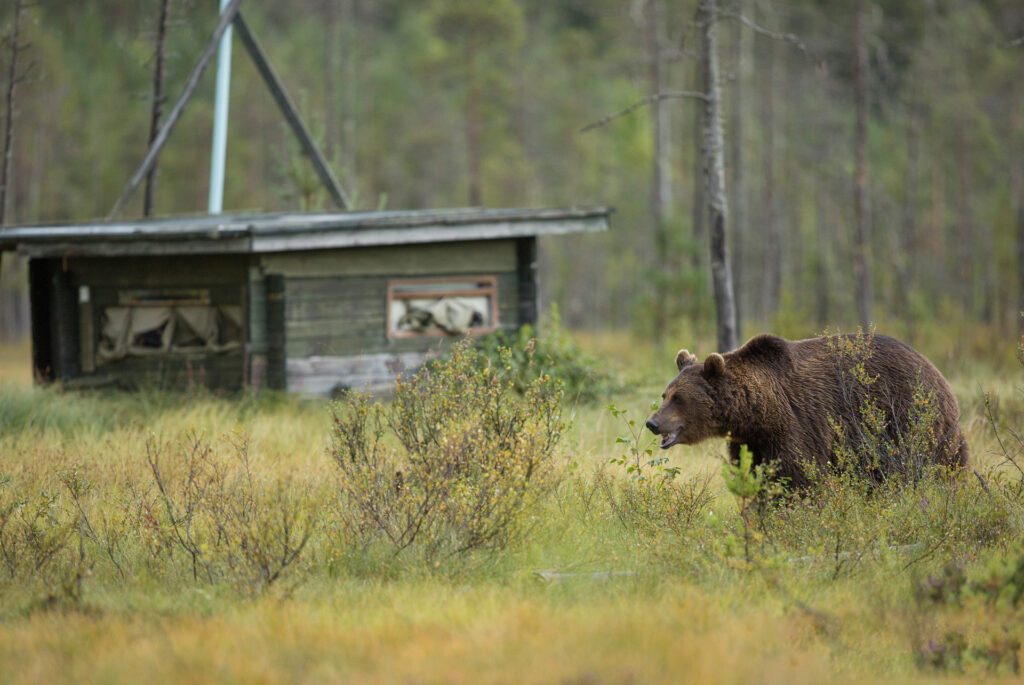
Not all wildlife tourism is equal.
Ethical bear watching should always prioritise animal welfare over guaranteed sightings.
At Natures Thrill, we believe responsible operators should:
When these principles are followed, tourism becomes an ally of conservation rather than a threat.
Few destinations combine:
quite like Finland.
Unlike many destinations where wildlife viewing relies heavily on luck, Finland’s specialist operators have refined decades of experience into safe, carefully managed experiences that maintain high viewing success while respecting the bears themselves.
For photographers and wildlife enthusiasts, few European destinations offer comparable opportunities.
A bear watching holiday isn’t simply about ticking another species off a wildlife list. It’s about experiencing one of Europe’s last great wildernesses while directly contributing to local livelihoods and encouraging the continued protection of Finland’s iconic brown bears.
Every booking helps support:
Most importantly, it reinforces a simple but powerful conservation message: wild bears are worth protecting because they are worth experiencing.
At Natures Thrill, we specialise in carefully selected Finland wildlife holidays that showcase the country’s incredible brown bears while supporting responsible tourism.
Our bear watching tours are designed to connect travellers with Finland’s wilderness in a respectful, ethical and unforgettable way. Whether you’re a wildlife photographer, a nature enthusiast or simply dreaming of seeing a wild brown bear for the very first time, Finland offers one of the finest bear watching experiences anywhere in Europe.
Ready to experience Finland’s magnificent brown bears for yourself? Explore our expertly crafted Finland bear watching holidays and discover why responsible wildlife tourism helps protect the very animals we travel to see.

Our weekly Newsletter highlights new adventures, exclusive offers, webinars, nature news, travel ideas, photography tips and more. Sign up today!
Get latest travel deals, inspiration, and exclusive offers delivered directly.
Error: Contact form not found.